Something alchemical happens when live music meets silent film. The image changes the way you hear the music, the music changes the way you see the image, and suddenly a century-old film feels immediate, unpredictable and alive.
Score & Screen reimagines classic silent cinema with original scores commissioned from Chicago composers and performed live by classical ensembles at The CheckOut. These aren’t recreations of what audiences might have heard when the films were first released. They’re entirely new musical responses, bringing the language of contemporary classical music into conversation with some of cinema’s most inventive early filmmakers.
Our first season begins with an audacious undertaking: all five films in Louis Feuillade’s legendary Fantômas serial, presented on five consecutive Wednesday nights with five newly commissioned scores. From there we move to F.W. Murnau’s terrifying Nosferatu on Halloween, the Soviet science-fiction epic Aelita: Queen of Mars, the surreal world of Georges Méliès, The Fall of the House of Usher, and the astonishing visual and rhythmic experiment Ballet Mécanique.
Every night is different. A different film. A different composer. A different ensemble. And a new score performed live just a few feet from the audience as the film unfolds on screen.
Fantômas
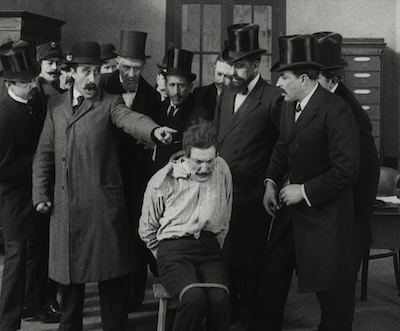
Five films. Five original scores. Five Wednesday evenings.
Long before the Joker, Darth Vader, or Dr. Evil, there was Fantômas—cinema’s first great supervillain. Coming out of the same literary tradition that gave us Sherlock Holmes and Professor Moriarty, Fantômas perfected the archetype of the criminal mastermind.
An impossible-to-catch phantom and serious evil badass, Fantômas captivated audiences in 1913 and helped invent the language of the thrillers we watch today. More than a century later, Louis Feuillade’s five-film serial remains astonishing, filled with ingenious visual storytelling, breathtaking stunts, surprising humor, and an atmosphere that would influence generations of filmmakers.
Across five consecutive Wednesday evenings, experience the complete saga, with each film featuring a newly commissioned score by a different Chicago composer performed live at The CheckOut.
That’s more than five hours of original music written specifically for these films—five world-premiere scores performed live in our intimate 60-seat space.
Come for one film or experience the entire saga. You won’t see anything else like this in Chicago. Presented in collaboration with Horror Rama.
Fantômas: In the Shadow of the Guillotine
Wednesday, September 16
7:30 PM
Meet Fantômas, cinema’s first great supervillain, as Inspector Juve begins his obsessive pursuit of the elusive master criminal.

Juve vs. Fantômas
Wednesday, September 23
7:30 PM
Fantômas escalates his reign of terror with a train robbery, a deadly snake attack, and ever more elaborate attempts to evade Juve and Fandor.
The Murderous Corpse
Wednesday, September 30
7:30 PM
A dead man’s fingerprints begin appearing at crime scenes after his corpse mysteriously vanishes, sending Fandor into one of Fantômas’s strangest mysteries.
Fantômas vs. Fantômas
Wednesday, October 7
7:30 PM
When Inspector Juve is accused of being Fantômas himself, disguises, doppelgängers, and a wonderfully bizarre Fantômas costume ball turn everything upside down.
The False Magistrate
Wednesday, October 14
7:30 PM
Fantômas assumes the identity of a powerful magistrate as Juve and Fandor make one final attempt to bring the criminal mastermind down.
Nosferatu
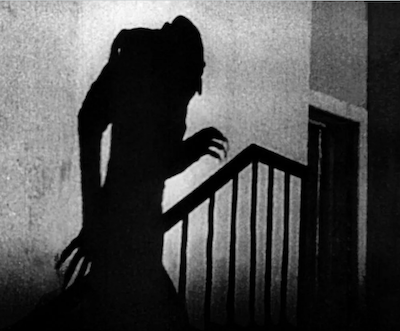
One of the most haunting films ever made gets a completely new soundtrack on Halloween night.
F.W. Murnau’s 1922 masterpiece Nosferatu helped invent the horror film: eerie, strange, visually unforgettable, and still genuinely unsettling more than a century after it was made.
For this special Score & Screen performance, Chicago composer Tim Corpus has created an original score for piano, percussion, and string quartet, performed live at The CheckOut as the film unfolds on screen.
Silent film and live music have a strange alchemy, and there may be no better film to experience this way than Nosferatu. Murnau’s shadows, impossible angles, and nightmarish images become something new when paired with a score being created by six musicians right in front of you.
Nosferatu. Live music. Halloween night. Sixty seats.
Saturday, October 31, 2026
7:30 PM
Aelita: Queen of Mars
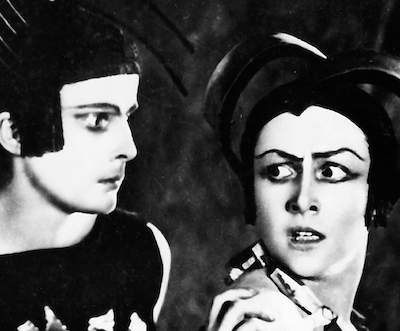
Before science fiction conquered Hollywood, Soviet filmmakers were already dreaming about life on Mars.
Yakov Protazanov’s 1924 Aelita: Queen of Mars is one of the landmarks of early science-fiction cinema—a wildly imaginative mixture of romance, revolution, social satire, and interplanetary fantasy.
The story moves between the upheaval of post-revolutionary Moscow and an astonishing vision of Mars ruled by the beautiful Queen Aelita. The film’s extraordinary Constructivist sets and costumes remain some of the most striking images of the silent era, creating a futuristic world unlike almost anything that came before it.
For Score & Screen, this groundbreaking film is reimagined with a new original score performed live at The CheckOut, bringing a contemporary musical voice to a century-old vision of the future.
Revolution. Romance. Mars. Live music. What more do you need?
Wednesday, December 2, 2026
7:30 PM
A Mélange of Méliès
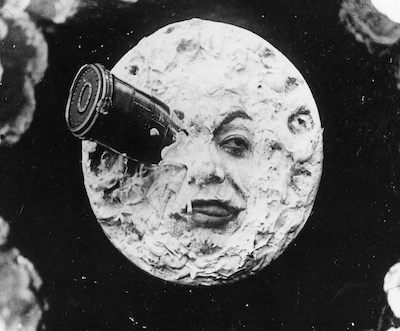
Before movies learned to tell stories, Georges Méliès taught them how to dream.
Magician, filmmaker, inventor, and one of cinema’s great visionaries, Georges Méliès transformed the new medium of film into a world of impossible voyages, multiplying heads, devils, fairies, celestial bodies, disappearing people, and astonishing visual tricks.
For this special Score & Screen program, we’ve assembled roughly an hour of Méliès’s extraordinary short films into one seamless cinematic journey, moving from his ingenious early trick films to elaborate fantasies including The Kingdom of the Fairies and, of course, his iconic A Trip to the Moon.
Composers Seth Boustead and Gene Pritsker create a new continuous score that moves from film to film without interruption, transforming dozens of little cinematic worlds into a single live film-and-music experience.
Magic. Devils. Fairies. The Moon. And an hour of live music for some of the strangest and most beautiful images ever put on film.
Friday, February 12, 2027
7:30 PM
Ballet Mécanique
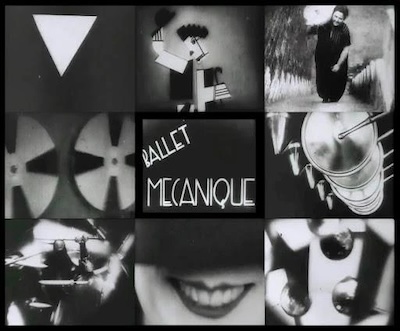
Machines. Motion. Rhythm. Dada. Welcome to the moment when movies went completely off the rails.
Score & Screen: Ballet Mécanique — Machines, Motion & the Avant-Garde dives into the radical explosion of experimental filmmaking in the 1920s, when artists stopped asking movies simply to tell stories and began treating the screen itself as a laboratory.
An hour of surreal, abstract, mechanical, and gleefully strange films explores a cinematic world of spinning objects, fractured bodies, impossible movement, visual rhythms, machines, repetition, and pure image. The program culminates in Fernand Léger and Dudley Murphy’s legendary Ballet Mécanique, one of the defining works of the early avant-garde.
And then there’s the music. George Antheil conceived his notorious Ballet Mécanique score as a musical machine of pounding rhythms, player pianos, percussion, sirens, and sheer sonic excess. For this performance, Dr. David Wetzel creates a new realization of Antheil’s score, bringing this outrageous musical experiment roaring back to life alongside the film.
It’s a collision of image and sound that artists dreamed about a century ago but technology could barely make possible.
One hundred years later, we’re going to give it another shot.
Friday, May 28, 2027
7:30 PM