Think of it as a book club for music.
Each Discovery Series evening is devoted to one extraordinary piece. We talk about where it came from, what makes it tick, and a few things to listen for. Then our musicians perform it live. We talk about what we heard—and perform the entire piece again.
The second hearing can be a revelation. Ideas you missed suddenly emerge, connections become clear, and unfamiliar music begins to open up.
Afterward, we continue the conversation at a catered reception with the musicians and everyone else in the room.
This season we’ll explore music by Schubert, Dutilleux, Saariaho, Prokofiev, and Mazzoli.
Schubert Quintet – Adagio Movement
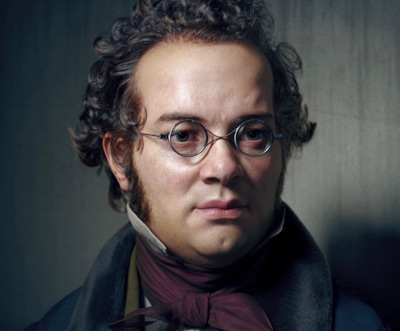
One of the most beautiful slow movements ever written. And one that becomes even more extraordinary the closer you listen.
Franz Schubert wrote his String Quintet in C Major, D. 956 in 1828, during the final months of his life. Scored unusually for two violins, viola, and two cellos, it has become one of the great landmarks of chamber music. :contentReference[oaicite:0]{index=0}
For this Discovery Series evening, we focus entirely on the Adagio. It begins in an almost suspended state of calm, with a simple, breathtaking melody floating above the second cello. Then the entire world of the piece is suddenly shattered by a turbulent, almost violent middle section before the opening music finally returns, transformed by everything we’ve just heard.
We’ll talk about how Schubert creates this extraordinary journey and listen for some of the details that make the music work. Then our musicians will perform the movement live. We’ll talk about what we heard, dig deeper, and perform it again.
Same music. Second hearing. Completely different experience.
Wednesday, November 4, 2026
7:30 PM

Dutilleux – Ainsi la nuit
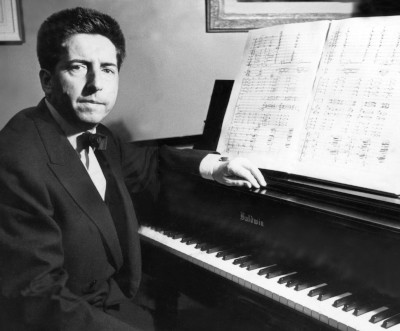
A piece that seems to emerge from darkness, flicker into view, disappear, and return transformed.
Henri Dutilleux’s Ainsi la nuit is one of the great string quartets of the 20th century—a mysterious, luminous work built from fleeting musical ideas that continually return in new forms.
Rather than unfolding like a traditional narrative, the music feels almost like memory. Sounds echo across movements, fragments reappear, colors shift, and connections gradually reveal themselves. It’s exactly the kind of piece that can feel completely different once you know what to listen for.
We’ll explore the sounds, structures, and recurring ideas that hold Ainsi la nuit together, hear the quartet performed live, talk about what we heard, and then experience the entire work again with fresh ears.
Listen once for the mystery. Listen again for the connections.
Tuesday, January 19, 2027
7:30 PM
Saariaho – Nymphéa
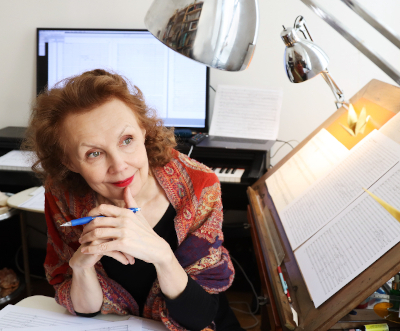
What happens when a string quartet stops sounding like four instruments and becomes an entire landscape of sound?
Kaija Saariaho’s Nymphéa is a mesmerizing work for string quartet and electronics in which harmony, texture, noise, and instrumental color are constantly shifting and transforming.
Inspired in part by the image of a water lily floating on water, Nymphéa creates a musical world that feels simultaneously delicate and enormous. Familiar string sounds dissolve into whispers, harmonics, glissandos, and electronic transformations, creating music that seems to breathe and move through the room.
We’ll take this remarkable piece apart and explore how Saariaho creates its extraordinary sound world. Then we’ll hear it performed live, talk about what we heard, and experience the entire piece again.
Once you know what you’re listening for, you’ll never hear it the same way again.
Wednesday, February 17, 2027
7:30 PM
Prokofiev – Quintet in G Minor

Five instruments that have almost no business being together. Prokofiev makes them sound inevitable.
Prokofiev’s Quintet in G minor, Op. 39 brings together oboe, clarinet, violin, viola, and double bass in a wildly colorful, rhythmically charged piece full of sharp edges, strange turns, humor, and unmistakable Prokofiev attitude.
Originally connected to music Prokofiev wrote for a traveling ballet, the Quintet has something theatrical about it. Melodies twist into unexpected shapes, rhythms lurch and dance, and five very different instruments continually form new alliances and contrasts.
We’ll explore how Prokofiev turns this unlikely combination into such a distinctive musical world, hear the piece performed live, talk about what we heard, and then experience it a second time with fresh ears.
Strange, witty, unpredictable—and a lot more fun once you know what’s going on.
Wednesday, April 14, 2027
7:30 PM
Mazzoli – Dark With Excessive Bright

Dark, luminous, strange, and completely absorbing.
Missy Mazzoli’s Dark with Excessive Bright is a haunting contemporary work built from rich harmonies, restless motion, and a sense of tension that never quite lets go.
The music feels both ancient and completely new—full of shadows, glowing textures, and ideas that seem to emerge from somewhere just beyond reach. It’s the kind of piece that draws you in emotionally first, then reveals more and more of its structure the closer you listen.
We’ll explore what gives the piece its distinctive sound, hear it performed live, talk about what we heard, and then experience it again with fresh ears.
A perfect way to close the season: one remarkable piece, heard twice, and a whole new way of listening.
Wednesday, May 12, 2027
7:30 PM